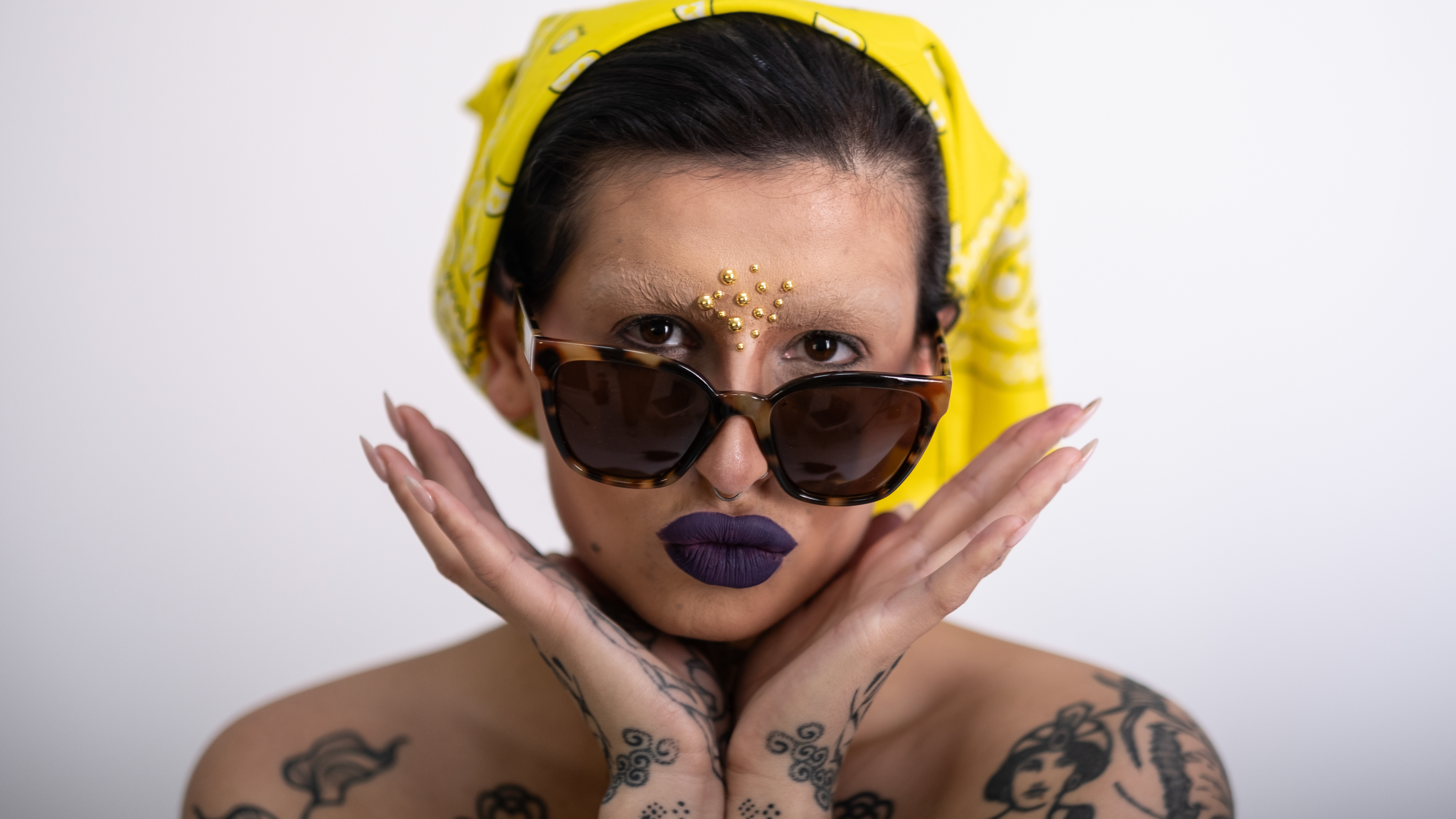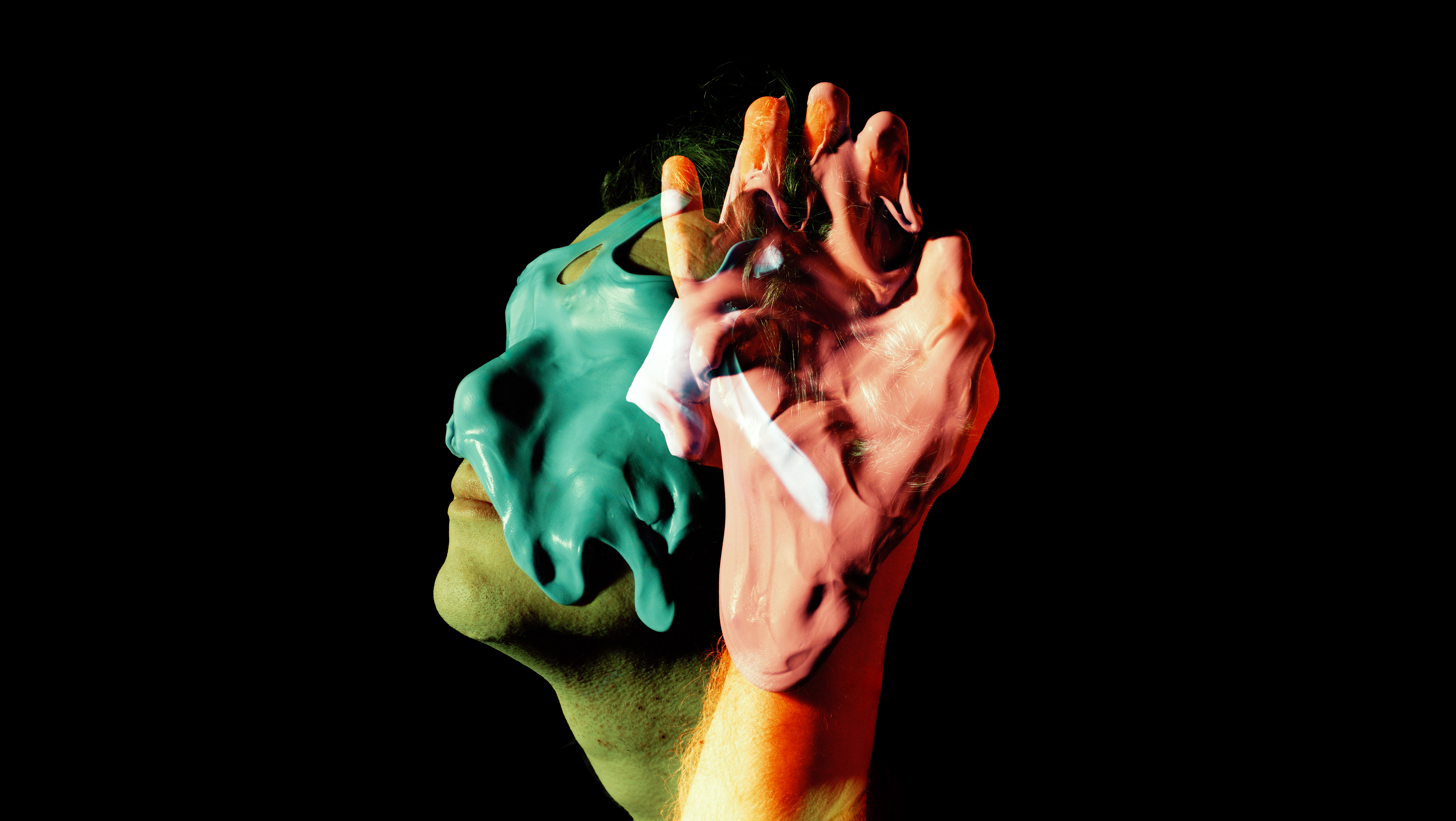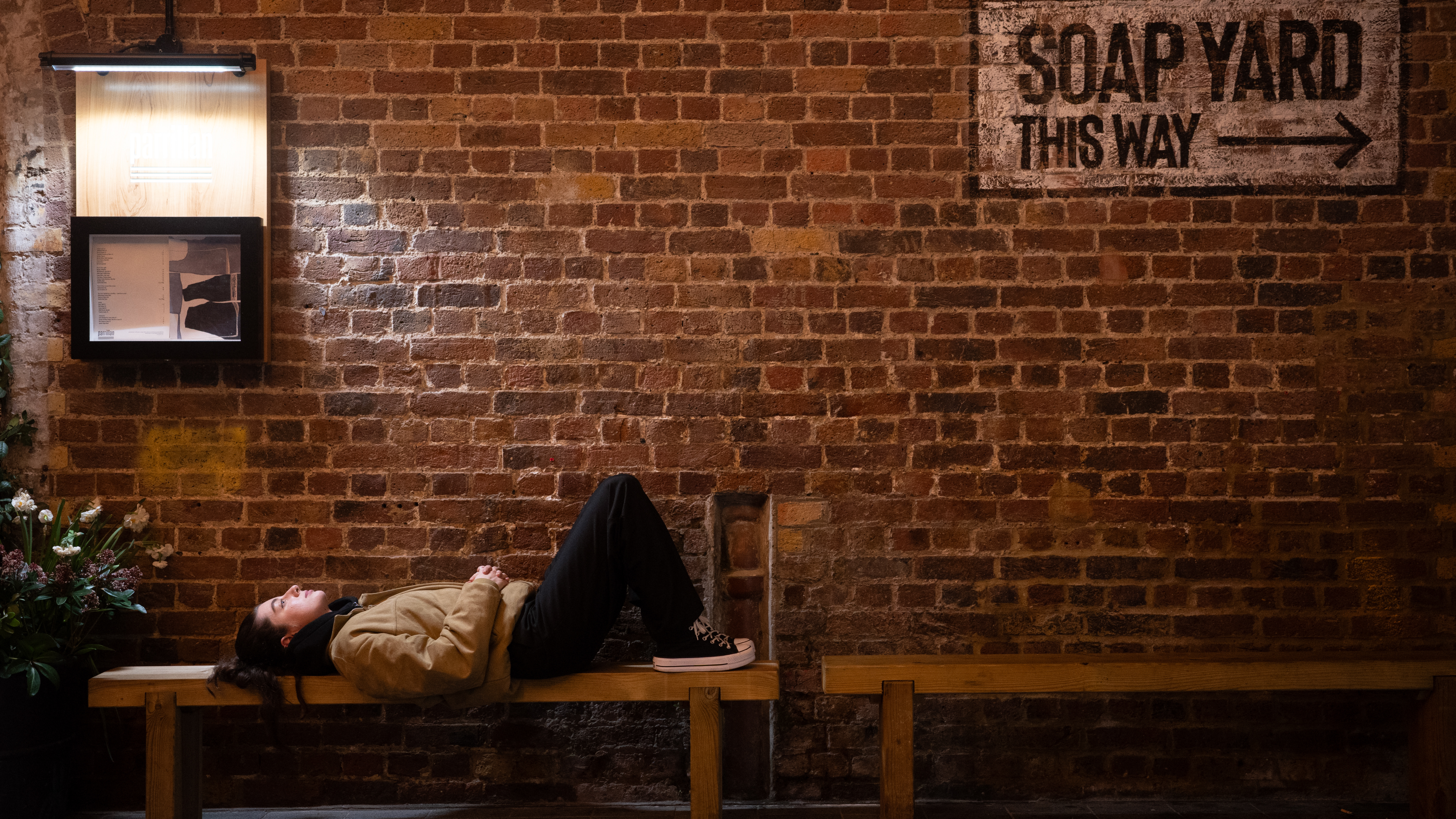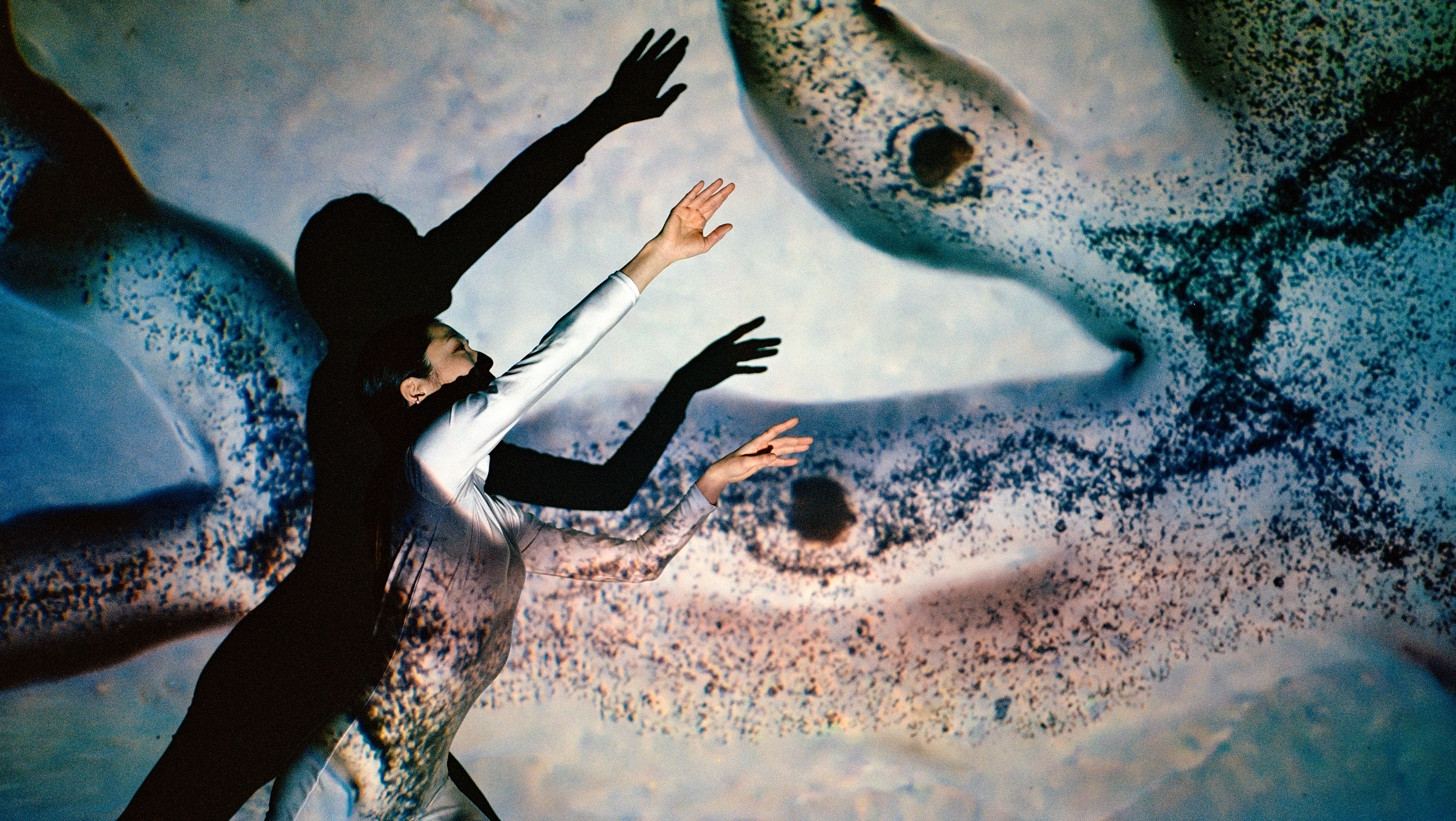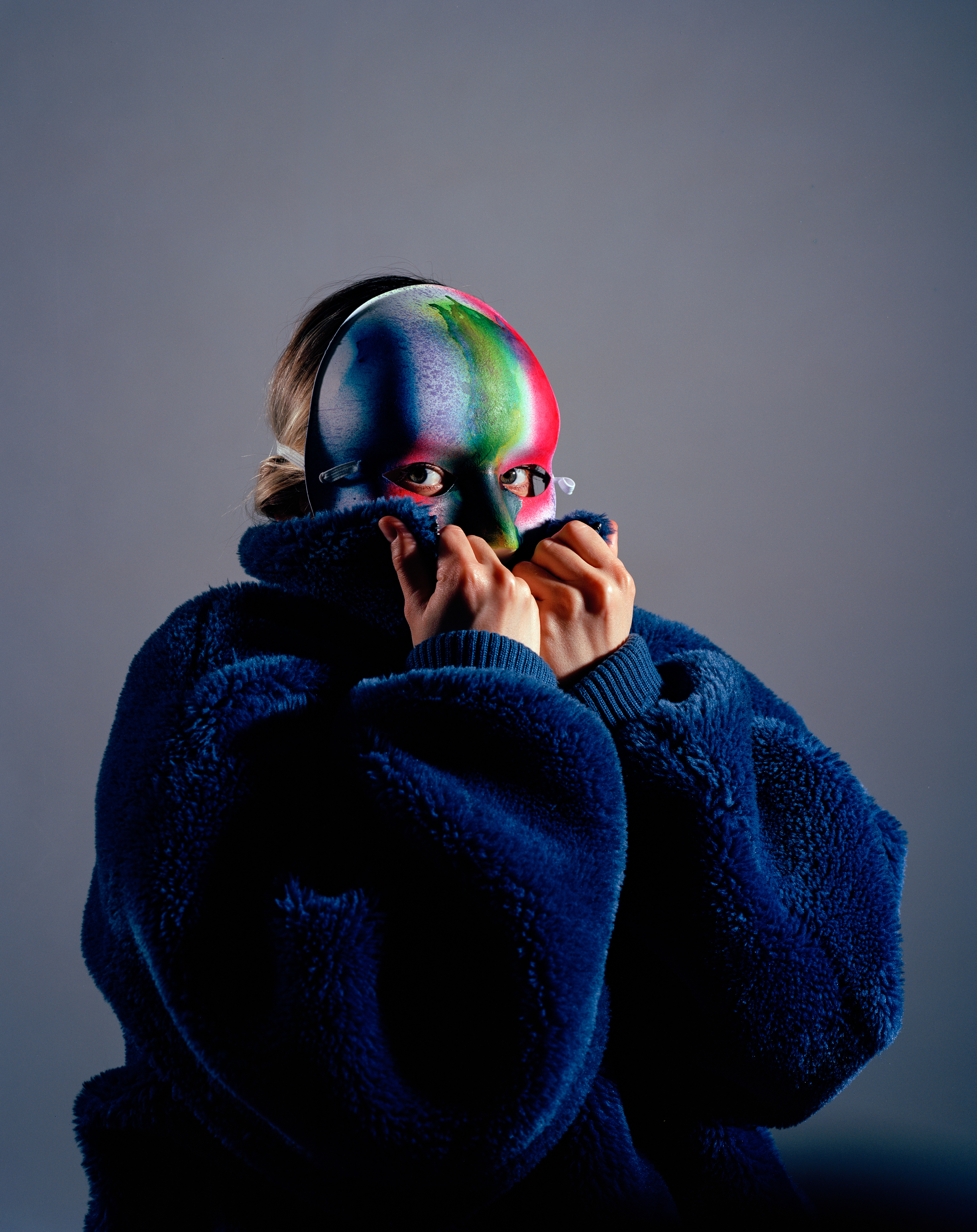
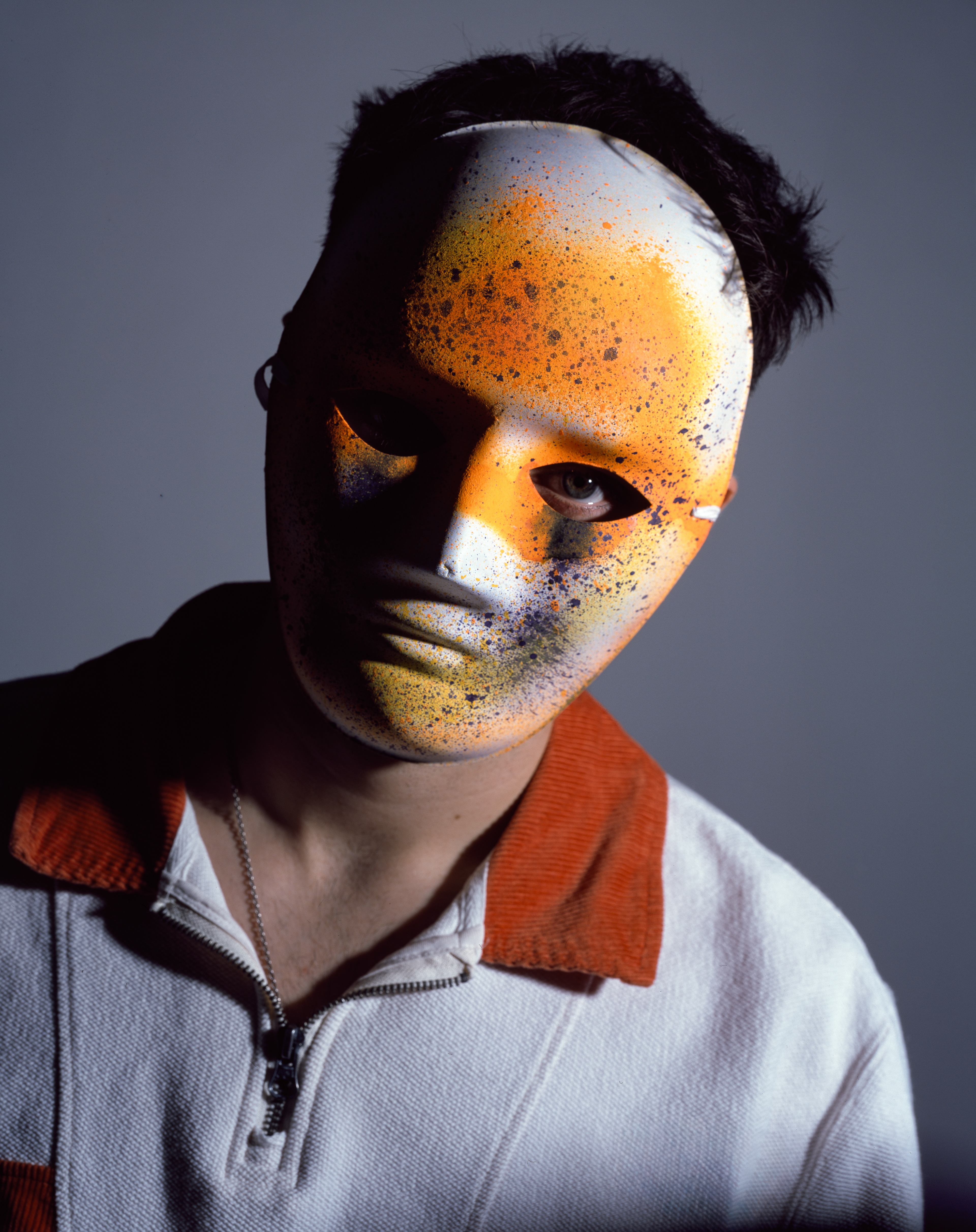
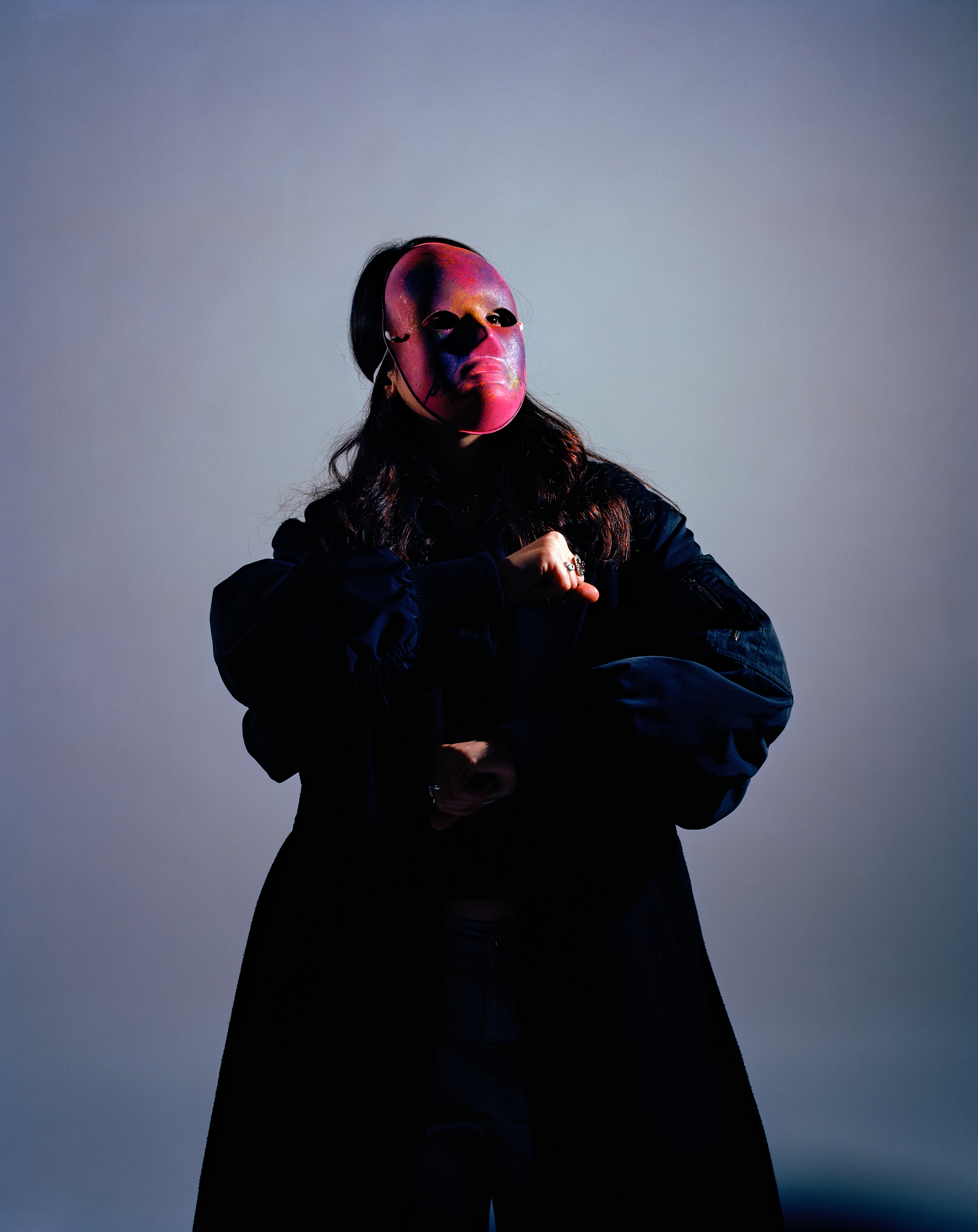
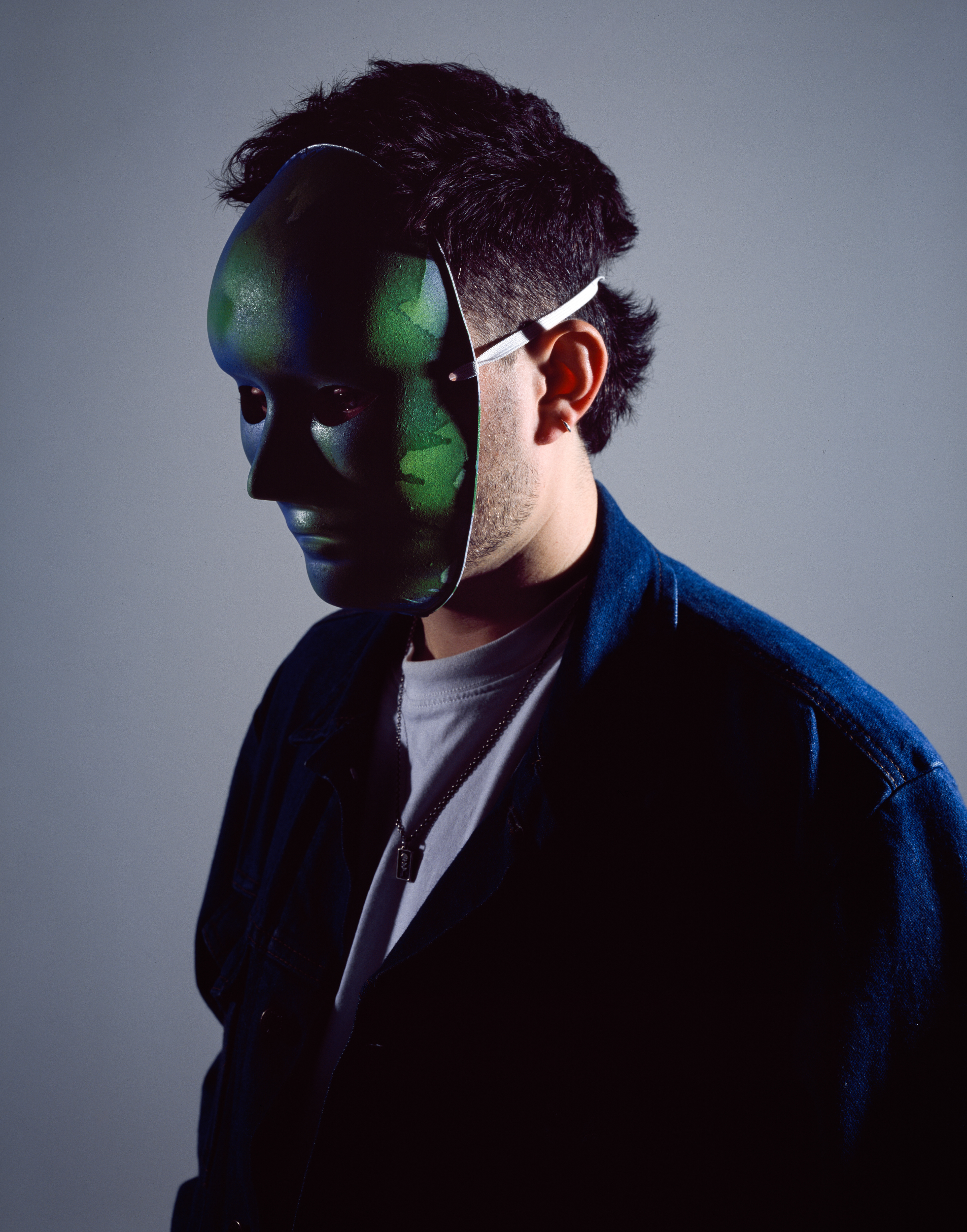
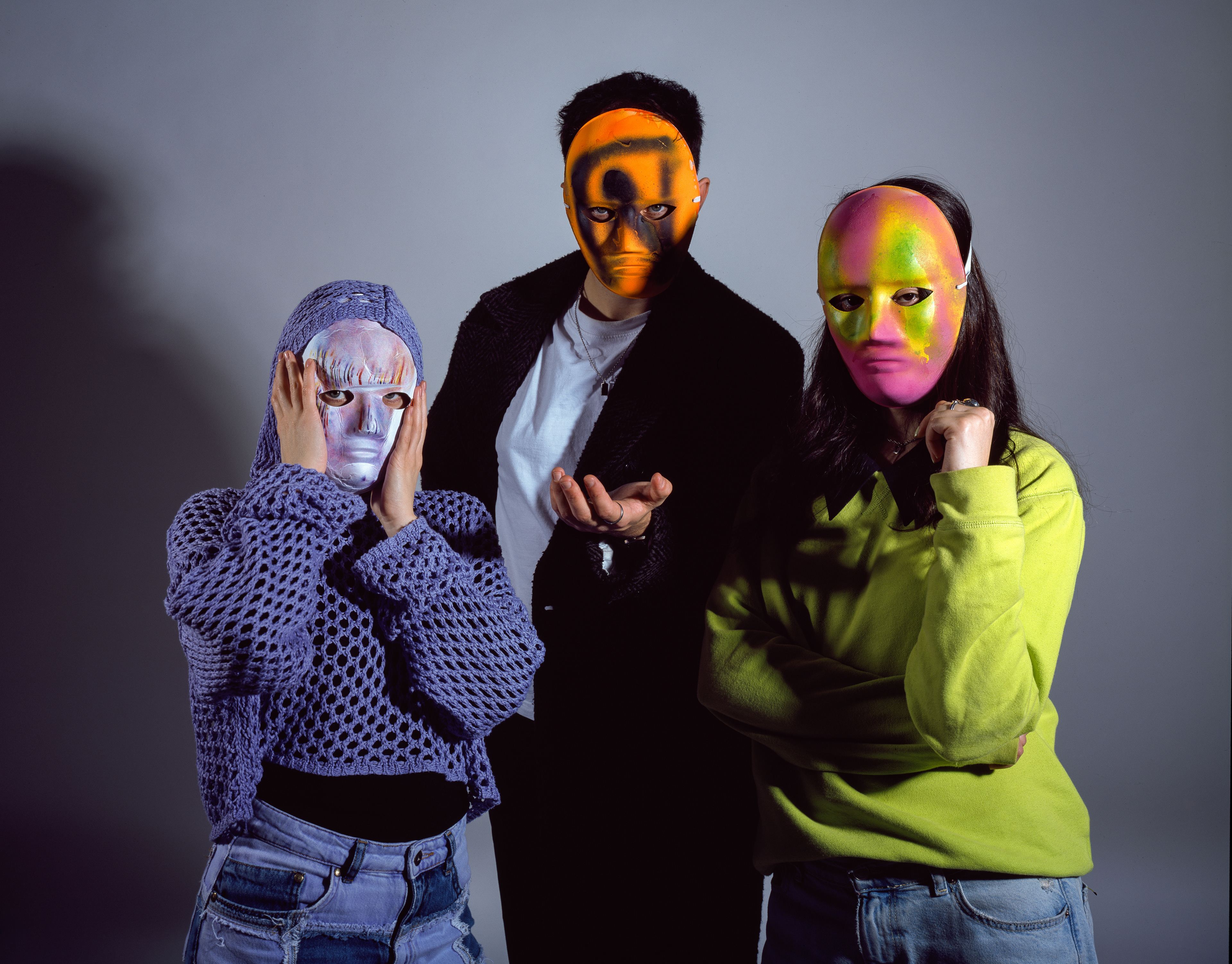
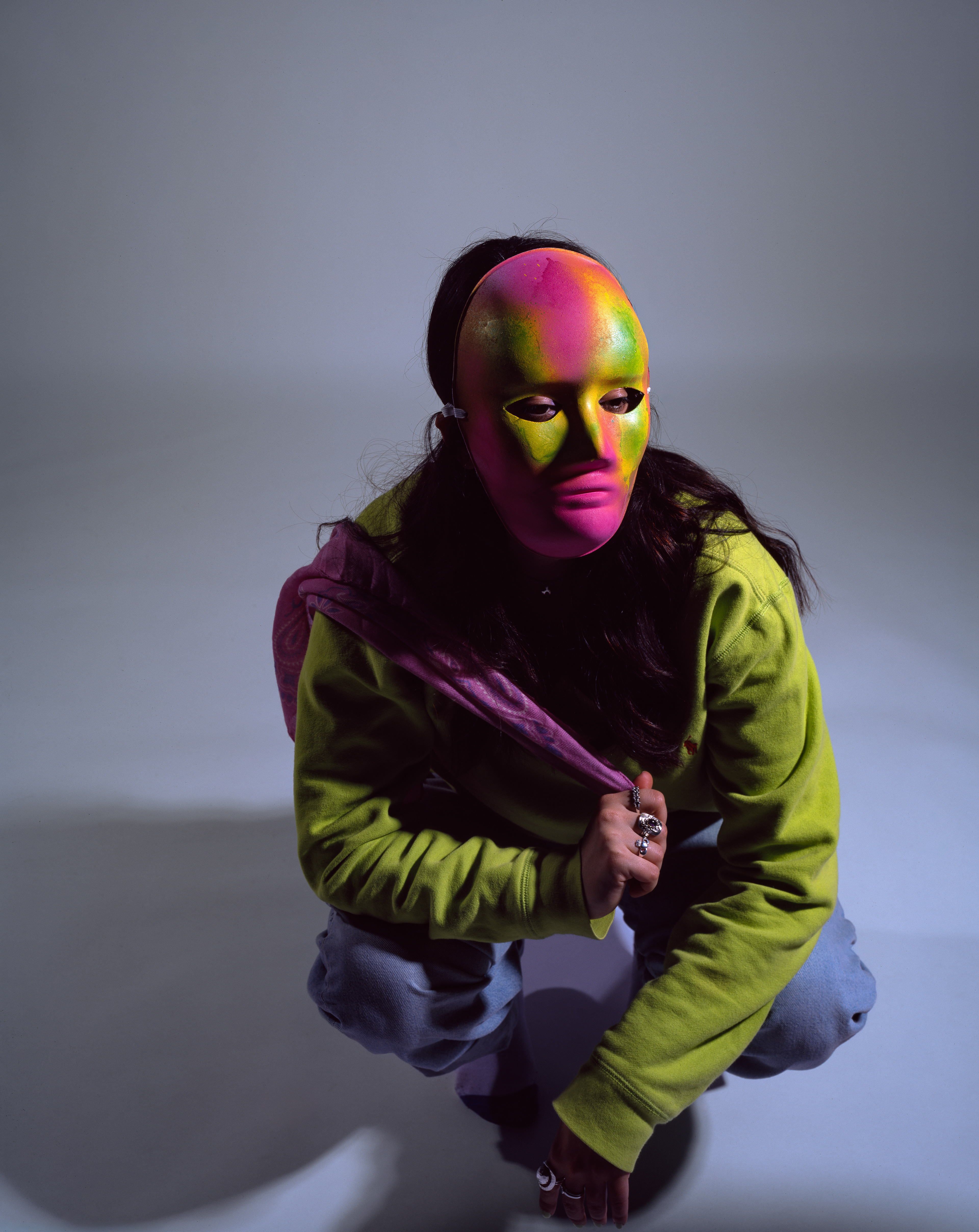
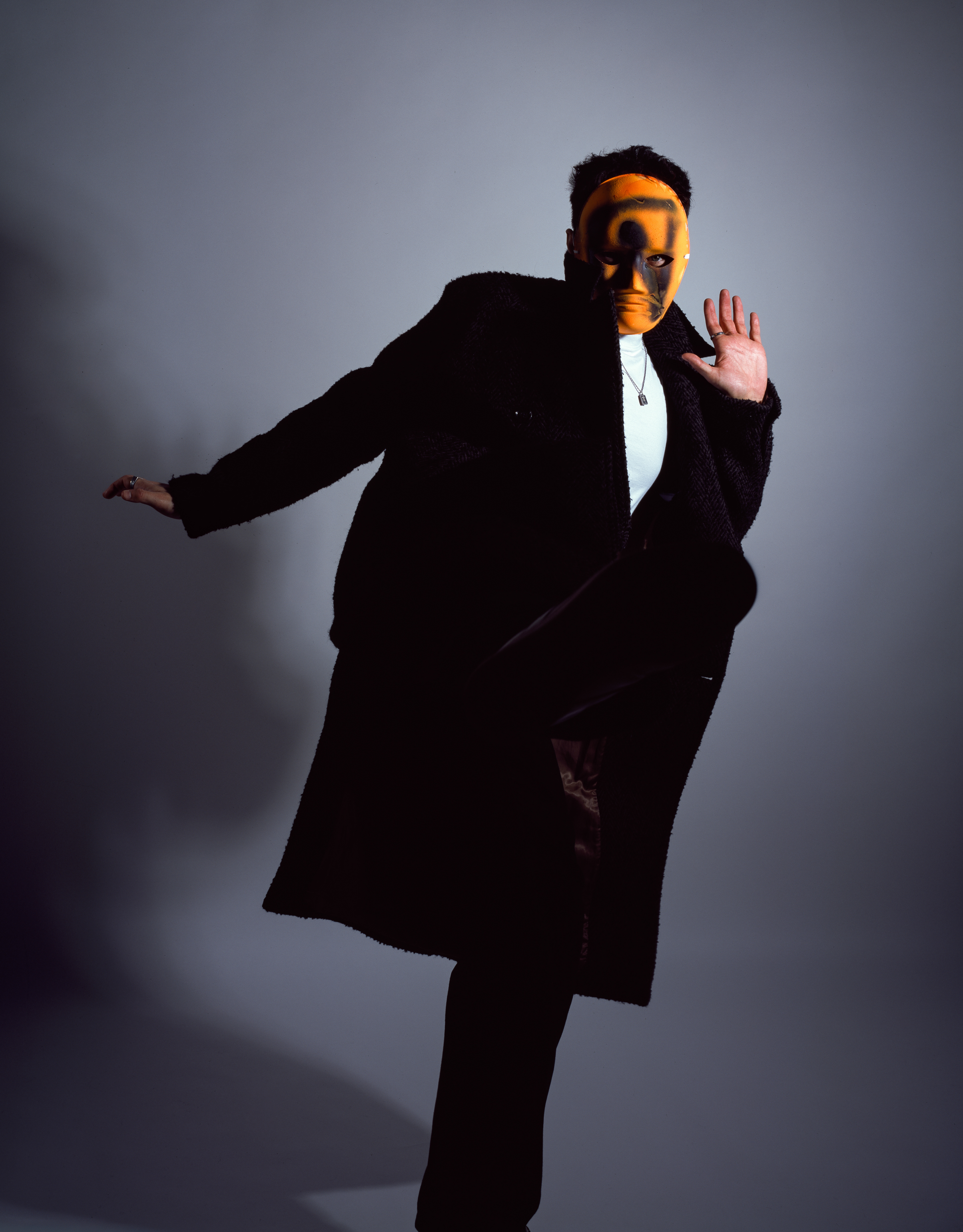
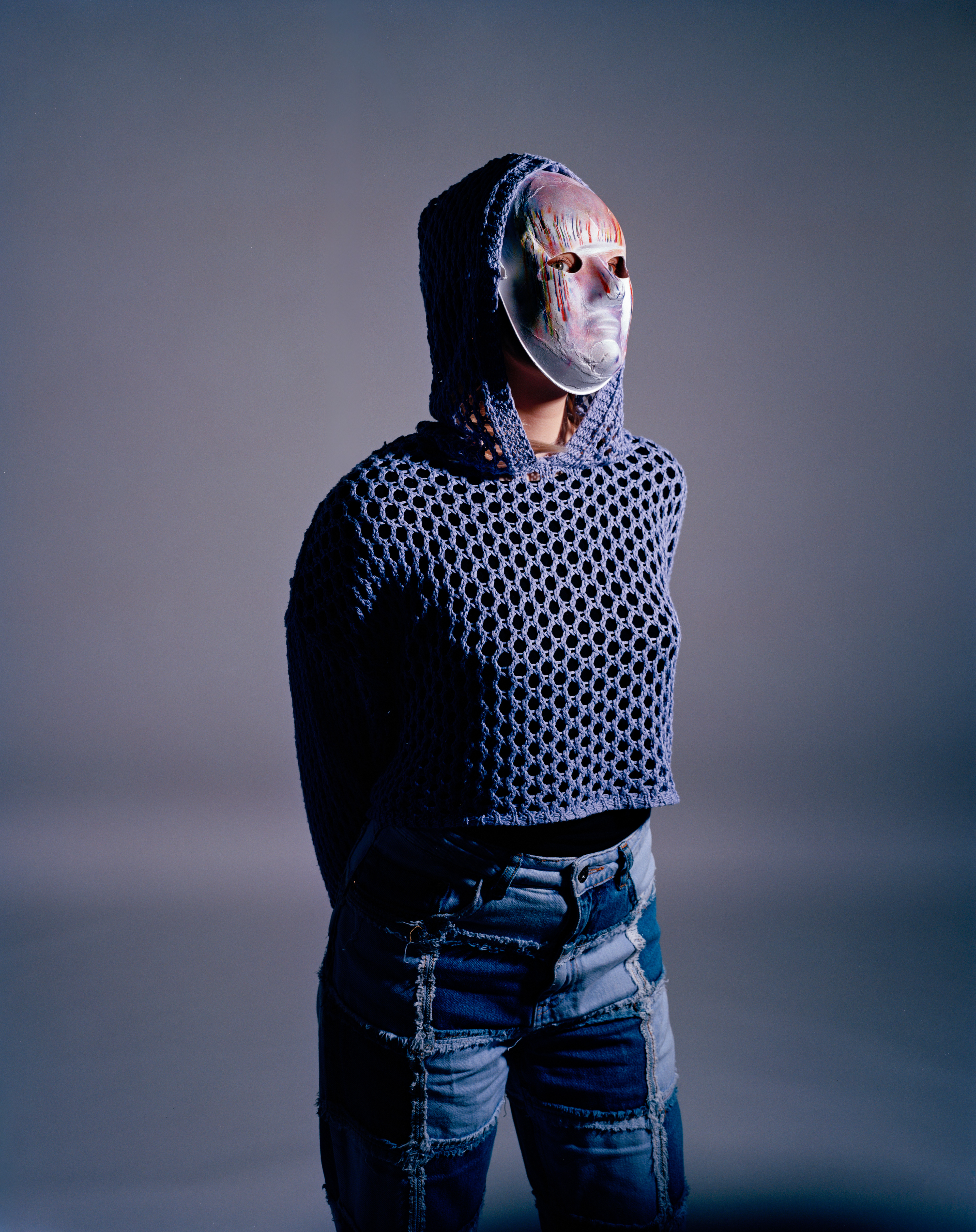
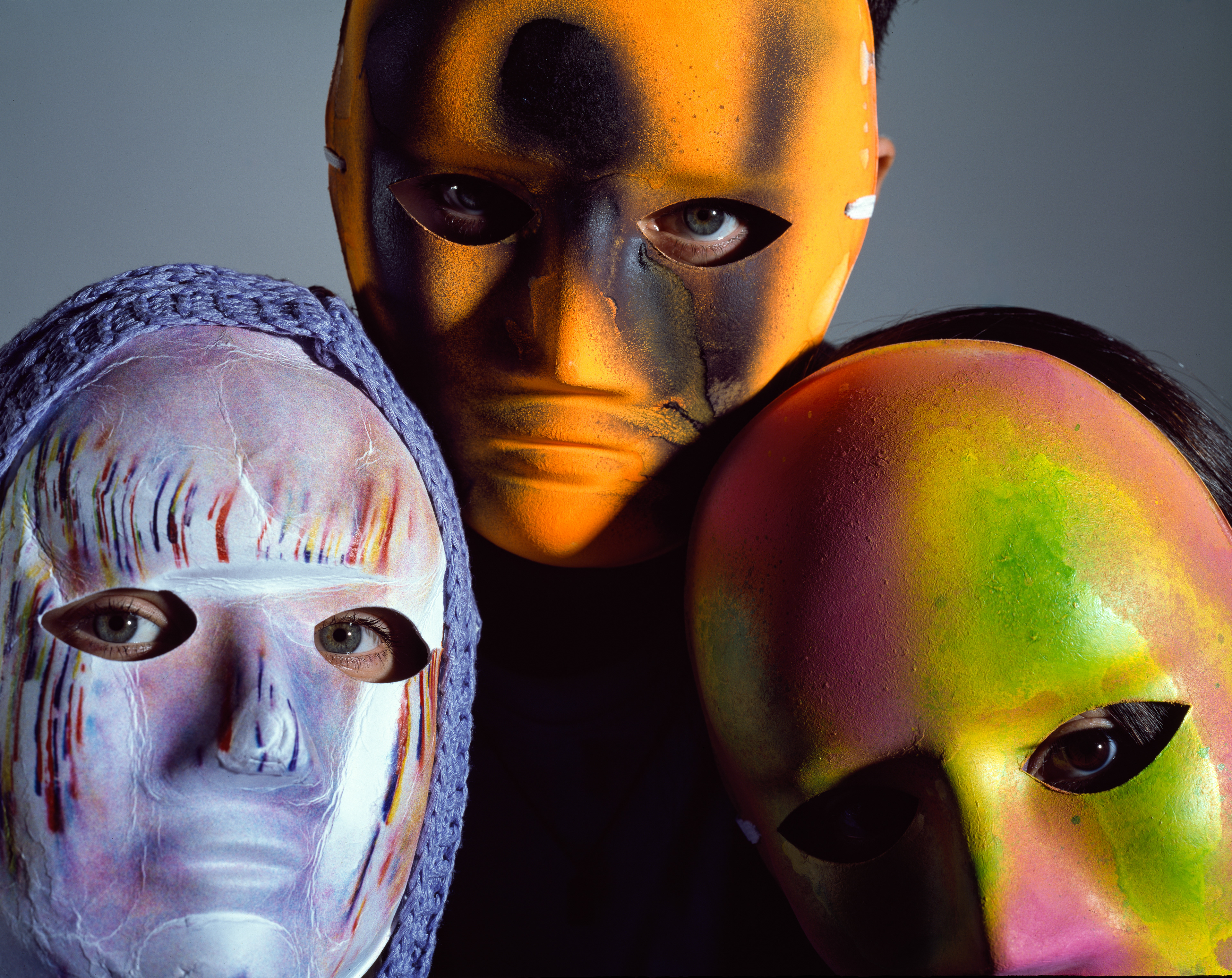
'In Good Company' begins with the idea that the inner demon is not an intruder but a companion. Society conditions people to fear parts of themselves that feel excessive or inconvenient — longing, vanity, pride, envy, detachment — and urges them to smooth these impulses into something more presentable. Yet these forces are also formative: they sharpen desire, protect vulnerability, and shape identity. The project repositions them not as enemies, but as collaborators. Models were invited to reflect on their own inner demons and construct masks embodying them — sculptural manifestations of deeply personal patterns. Wearing the mask externalised what is usually internal, creating a moment of encounter where something hidden was given form and allowed to return the gaze. The visual language draws on 1980s editorial fashion — vibrant colour, dramatic lighting, and theatrical excess — situating the inner demon within glamour rather than outside it. The tension between spectacle and vulnerability reflects how people curate themselves in public: composed, exaggerated, camera-ready. Seven archetypes emerged: The Liminal Lover, The Double, The Fortress, The Spectator, The Showman, The Suspended, and The Spare — each named with reference to Tarot as a tool for reflection rather than mysticism, offering a language for reading the self. These demons are playful and charismatic as much as fragile. To recognise them is not to defeat them, but to acknowledge them — and discover we are already in good company.